Perimenopause is the next season of motherhood — full of change, growth, and a few hormonal surprises. Learn what’s happening in your body, the foods that help, and a simple meal plan to feel your best.
The Next Season of Mom Life and Health: Perimenopause
If you’ve been following Mom to Mom Nutrition since the days of baby purées and toddler snack boards, you know this space has always followed the seasons of motherhood. These days, instead of nap schedules and snack cups, my Google search history includes things like “why am I sweating at night?” and “is it perimenopause?”
Turns out, just like every other phase of motherhood, this one’s easier when we talk about it — and when we nourish ourselves through it.
So let’s break down the what, when, who, and how of perimenopause — plus the foods that can help us feel a little more like ourselves again.
What Is Perimenopause?
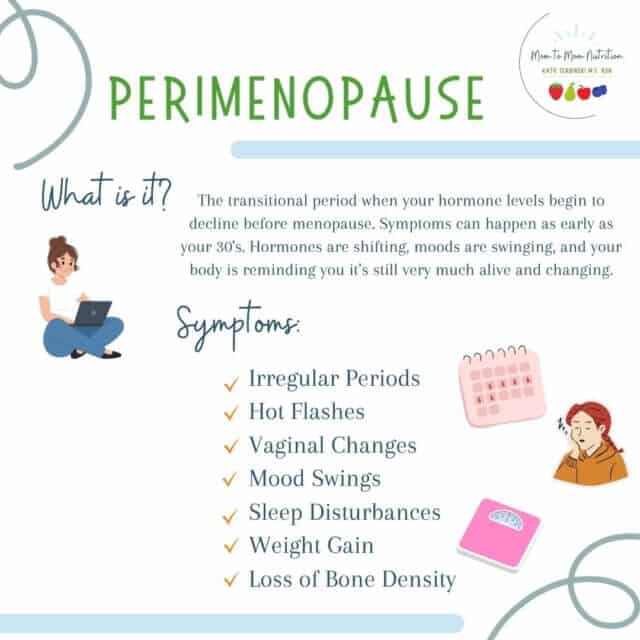
Perimenopause is the transition period leading up to menopause — when your ovaries gradually produce less estrogen and progesterone. It can last anywhere from four to ten years and officially ends one year after your final menstrual period.
During this time, hormone levels fluctuate (sometimes wildly), which can cause symptoms like irregular periods, night sweats, mood changes, sleep issues, and shifts in metabolism.
Think of perimenopause as puberty in reverse: hormones are shifting, moods are swinging, and your body is reminding you it’s still very much alive and changing.
Who Does It Affect (and When)?
Most women start noticing changes in their 40s, though late 30s isn’t uncommon. Genetics, lifestyle, stress, and health history all play a role in when and how symptoms show up.
You might notice:
- Changes in your menstrual cycle
- Hot flashes or night sweats
- Brain fog or mood shifts
- Trouble sleeping
- Changes in body composition or metabolism
If that sounds familiar — you’re not alone. We’re the first generation of moms Googling “perimenopause symptoms” while helping with 5th-grade math homework, and it’s about time we start normalizing the conversation.
The Hormones Behind the Chaos
Let’s simplify what’s actually happening inside:
🩸 Estrogen
- The “main character” of perimenopause.
- Responsible for regulating your menstrual cycle, keeping bones strong, and maintaining skin elasticity and mood stability.
- As estrogen starts to fluctuate (sometimes high, sometimes low), you might feel mood swings, hot flashes, and changes in skin, sleep, or cycle length.
🌙 Progesterone
- The “calming” hormone.
- Helps you sleep well and feel emotionally grounded.
- Drops earlier and faster than estrogen during perimenopause, which can explain insomnia, anxiety, and that feeling of being “wired but tired.”
🔥 Cortisol
- Your stress hormone — and during perimenopause, it tends to creep up due to less progesterone (which normally helps keep it in check).
- Elevated cortisol can make it harder to manage weight, regulate blood sugar, and stay calm during stress (you know, like homework time).
🍽️ Insulin
- As estrogen declines, your body can become more insulin-resistant — meaning carbs and sugars spike blood sugar faster.
- Pairing carbs with protein and healthy fat helps keep energy and mood steady.
Bottom line: perimenopause isn’t your body “failing.” It’s your hormones recalibrating — and with nutrition, movement, and stress care, you can support that process naturally.
How Food Can Help You Feel Better
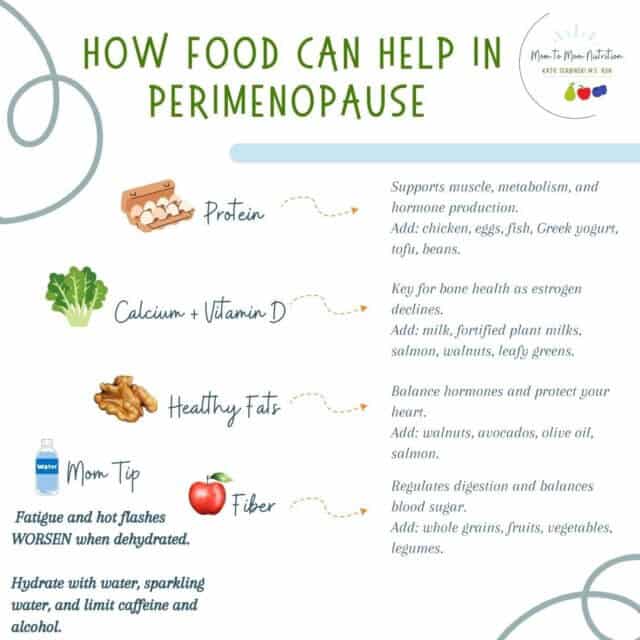
Here’s the good news: the same foods that supported your family still support you now — just with a few adjustments.
Sample Perimenopause-Friendly Meal Plan (1 Day)
Breakfast: Greek yogurt parfait with berries, walnuts, and chia seeds
Snack: Apple slices + peanut butter
Lunch: Salmon salad with leafy greens, quinoa, and olive oil vinaigrette
Snack: Cottage cheese with sliced peaches
Dinner: Stir-fry with chicken, broccoli, and brown rice
Evening: Herbal tea or warm milk with cinnamon
Beyond Food: Lifestyle Habits That Help Perimenopause Symptoms
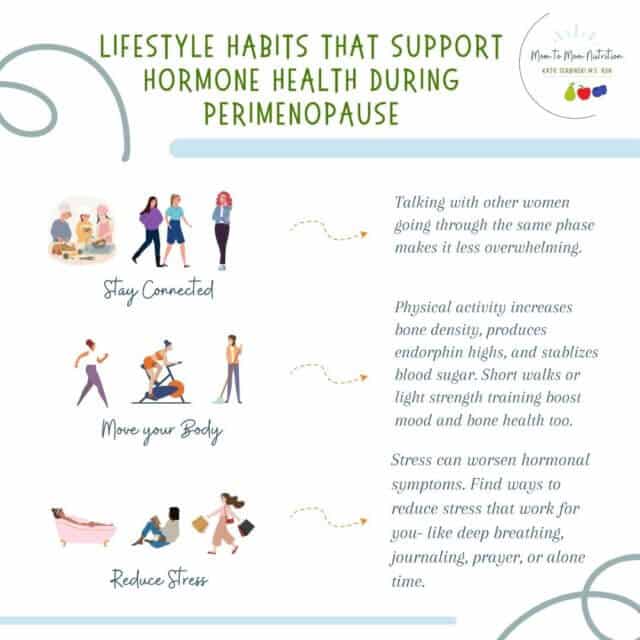
- Move your body — even short walks or light strength training help balance hormones and boost mood.
- Sleep — create a calming bedtime routine and limit caffeine after noon.
- Stress less — journaling, prayer, or a few deep breaths can lower cortisol.
- Connect — share your experience with other women; it makes all the difference.
Perimenopause might surprise you, but it doesn’t have to sideline you. With good food, good friends, and a sense of humor, we can navigate this next chapter — together.
Mom to Mom Wrap-Up
Motherhood has always been about transitions — baby steps, new routines, unexpected changes. Perimenopause is just another one. It’s a reminder to care for yourself the same way you’ve always cared for everyone else.
Have a question or a recipe that’s helped you feel your best lately? Share it in the comments or tag @momtomomnutrition — because talking about this stage helps all of us.