Low energy after 35? Learn how eating patterns, stress, and hormones affect sleep and blood sugar—and what to do instead.
Low Energy After 35 Matters to Me Too!
In my work as a dietitian with women through Nourish, I continue to see the same pattern.
Many women come in thinking they have a weight problem.
But as we talk, it becomes clear they’re also dealing with:
- low energy
- poor sleep
- feeling “wired but tired”
- rising blood sugar levels
And almost always, they’re also:
- eating less
- skipping meals
- trying to stay “on track”
These aren’t separate issues.
They’re all connected.
If you haven’t read this yet…
Before we go deeper, it’s helpful to understand why eating less often stops working in the first place.
👉 You can read that here:
Why You’re Not Losing Weight After 35 (Even When You’re Eating Less)
That post breaks down the foundation.
This one builds on it.
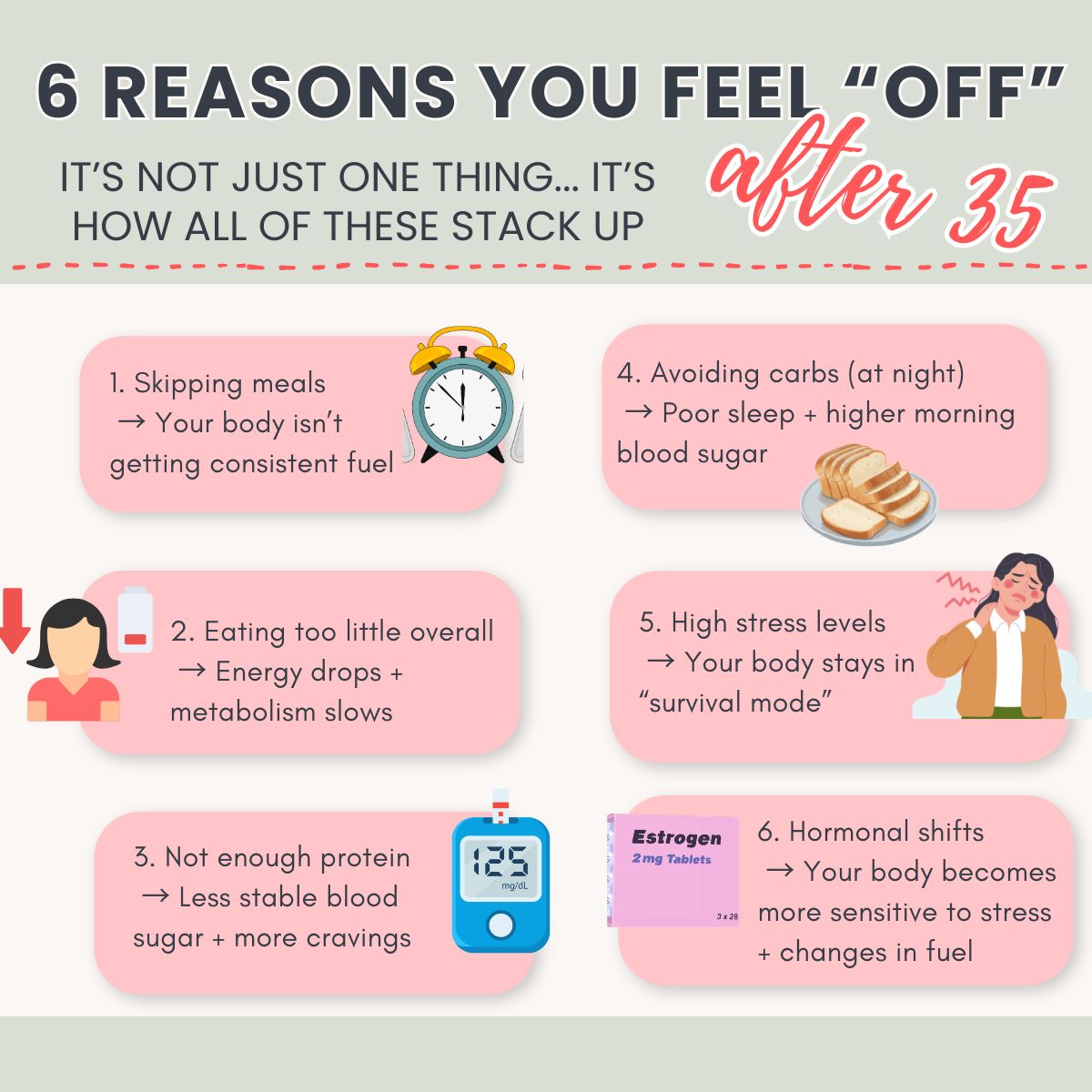
Why everything suddenly feels “off”
After 35, your body becomes more sensitive to:
- inconsistent eating
- low fuel
- stress
- poor sleep
When those stack up, your body doesn’t just “push through.”
It adapts.
And that’s when you start to feel:
- more tired
- more reactive
- less like yourself
Let’s start with energy
One of the first changes women notice is energy.
Instead of feeling steady, it becomes:
- slow in the morning
- crashing in the afternoon
- dependent on caffeine
This often traces back to inconsistent or inadequate fueling.
When your body isn’t getting enough throughout the day, it’s constantly trying to compensate.
Blood sugar plays a bigger role than you think
Even if you’ve never focused on blood sugar before, it matters here.
Your body thrives on stability.
But when you:
- skip meals
- eat very lightly
- go long stretches without food
Your blood sugar becomes less steady.
That can show up as:
- energy dips
- cravings
- irritability
- feeling shaky or off
What happens overnight
This is where many women get confused.
If you’re eating less, you might expect everything to go down—including blood sugar.
But the body doesn’t work that way.
When you don’t get enough fuel during the day:
- your body increases stress signals overnight
- your liver releases stored glucose into your bloodstream
This can lead to:
- higher fasting blood sugar
- restless sleep
- waking up tired
So even when you’re eating less, your body is still trying to keep you going.
Why sleep gets worse
Sleep is one of the first things to shift when your body feels under-supported.
You might notice:
- trouble falling asleep
- waking up in the middle of the night
- feeling “tired but wired”
This happens because your body is staying alert instead of fully settling into rest.
It’s not random.
It’s a response.
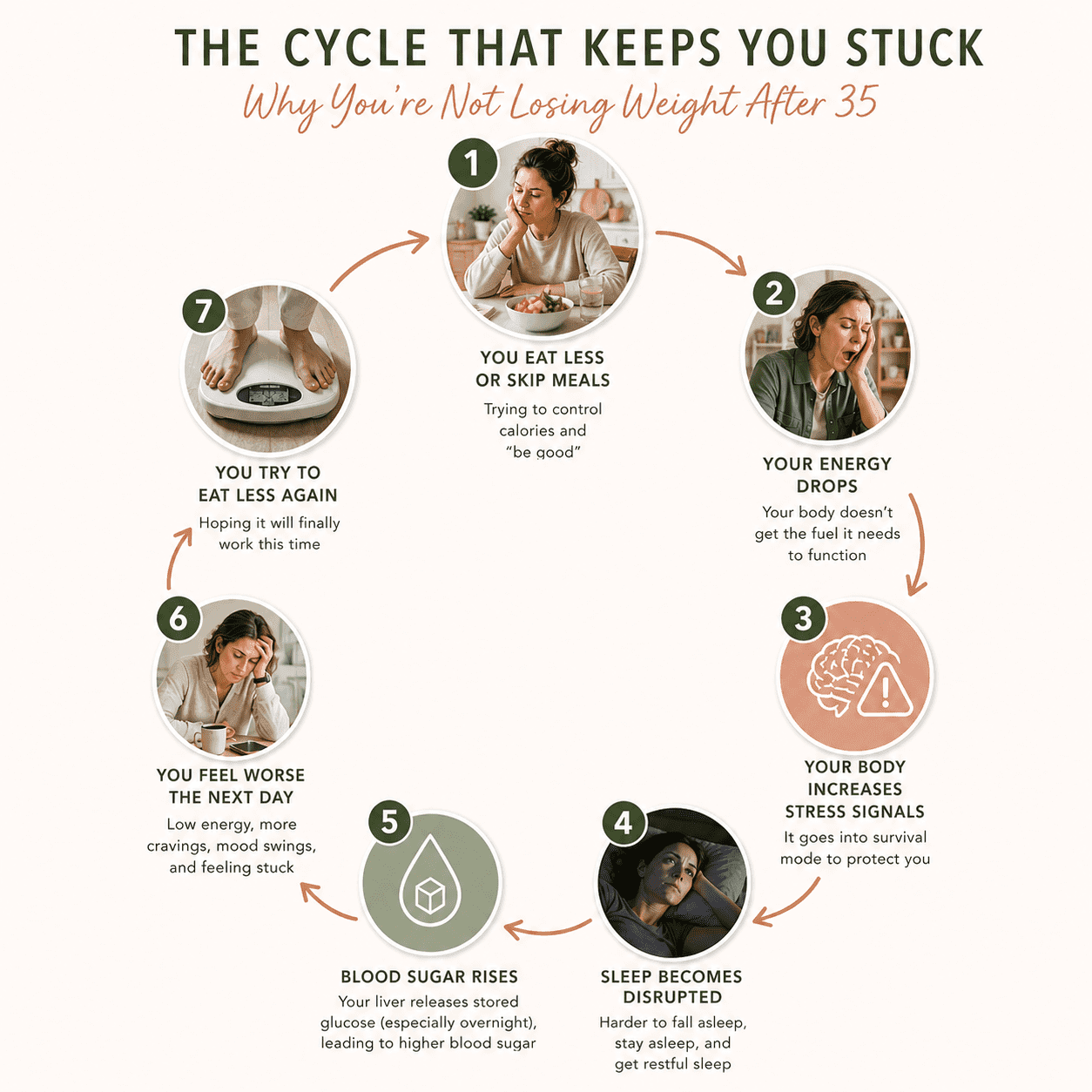
The cycle that keeps this going
This is the pattern I see most often:
You eat less or skip meals
Your energy drops
Your body increases stress signals
Sleep becomes disrupted
Blood sugar rises
You feel worse the next day
You try to eat less again
And the cycle repeats.
Why this is often misunderstood
Many women assume:
- “I need to cut carbs”
- “I need to be more strict”
But in reality, the issue is often the opposite.
Your body isn’t overwhelmed.
It’s under-fueled.
What actually helps your body stabilize
Instead of trying to do less, the goal is to support your body more consistently.
That includes:
- eating regular meals
- including protein, carbs, and fat
- avoiding long gaps without food
- eating enough at dinner
These changes help your body feel:
- more stable
- more supported
- more responsive
A simple place to start
If you’re not sure what this looks like in real life, start simple.
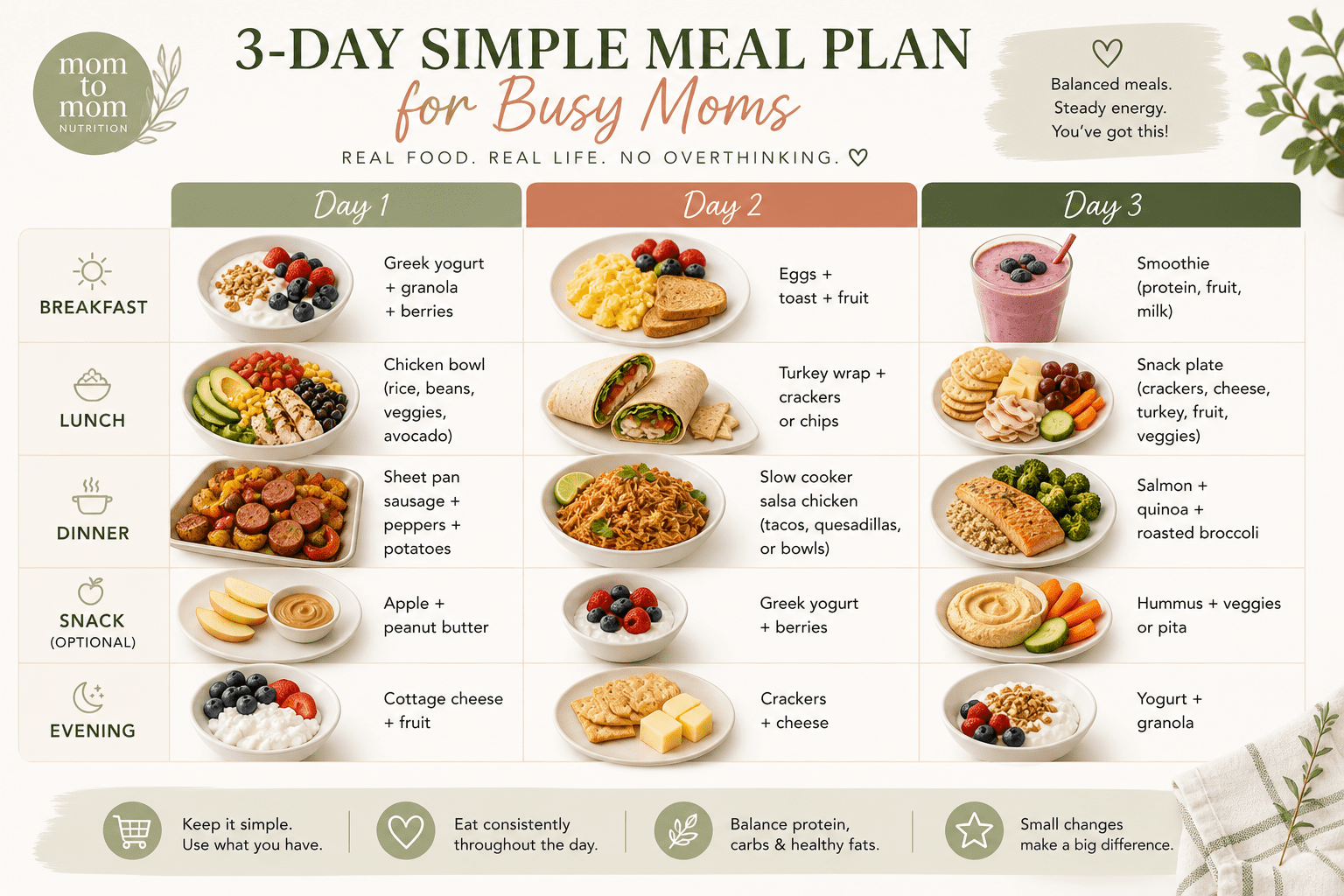
I created a 3-day meal plan for busy moms that focuses on:
- balanced meals
- consistent eating
- realistic, repeatable options
👉 You can use this as a starting point:
3-Day Simple Meal Plan for Busy Moms
Day 1
Breakfast: Greek yogurt + granola + berries
Lunch: Chicken bowl (rice, beans, veggies, avocado)
Dinner: Sheet pan sausage + peppers + potatoes
Snack (optional): Apple + peanut butter
Evening: Cottage cheese + fruit
Day 2
Breakfast: Eggs + toast + fruit
Lunch: Turkey wrap + crackers or chips
Dinner: Slow cooker salsa chicken (tacos, quesadillas, or bowls)
Snack: Greek yogurt + berries
Evening: Crackers + cheese
Day 3
Breakfast: Smoothie (protein, fruit, milk)
Lunch: Snack plate (crackers, cheese, turkey, fruit, veggies)
Dinner: Salmon + quinoa + roasted broccoli
Snack: Hummus + veggies or pita
Evening: Yogurt + granola
What this does differently
This isn’t about eating perfectly.
It’s about:
- eating enough
- eating consistently
- giving your body what it needs to function well
A different way to think about how you feel
If your energy is low, your sleep is off, and your blood sugar is changing, your body isn’t failing.
It’s communicating.
And when you start responding to those signals instead of pushing through them, things can begin to shift.
What’s next
In the next post, I’ll walk you through exactly how to build simple meals using a formula you can repeat every day—without overthinking it.