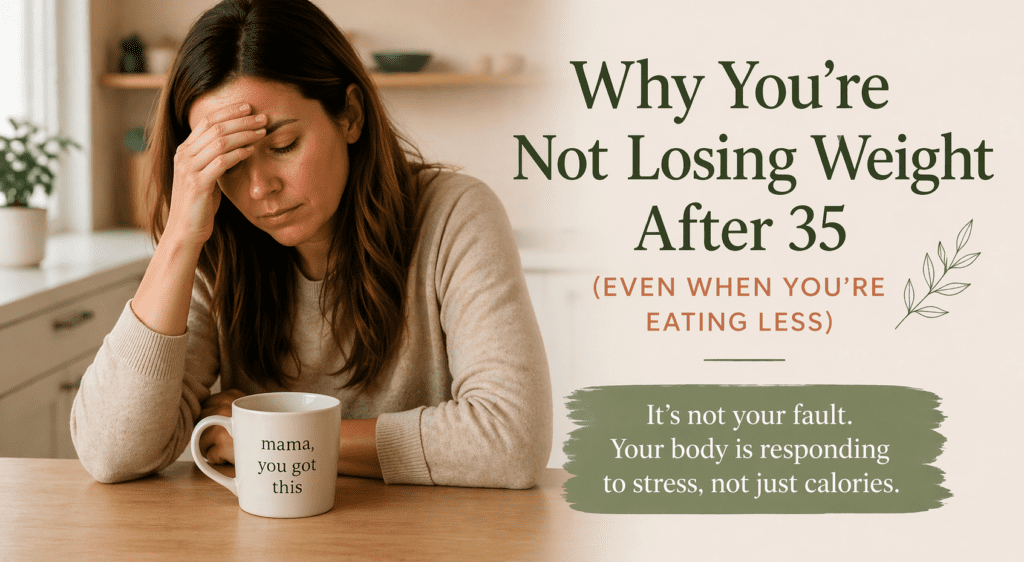
Not losing weight after 35 even though you’re eating less and exercising? Learn why under-eating, stress, and hormones can stall weight loss—and what to do instead.
Why I’m writing this
In my work as a registered dietitian, I see the same pattern over and over again.
I currently work with women across the country through my role at Nourish, and a large portion of my clients are in their late 30s, 40s, and early 50s.
They come in frustrated and confused.
They’re doing what they’ve always been told to do:
- Eating less
- Trying to be consistent
- Exercising regularly
But instead of losing weight, they’re noticing:
- Weight gain (especially around the midsection)
- Low energy
- Poor sleep
- Feeling “off” in their body
If this sounds familiar, you’re not alone—and you’re not doing anything wrong.
Could I be in perimenopause? If you’ve heard that, you could be right too. Read this to learn more about perimenopause.
Why eating less stops working after 35
When weight loss stalls, the first instinct is usually to cut back more.
But after 35, your body often responds differently to that approach.
Instead of speeding up weight loss, eating less can actually slow things down.
Your body isn’t trying to make things harder—it’s trying to protect you.
Your body is responding to stress, not just calories
Weight loss is not just about calories in and calories out.
Your body is constantly asking:
“Do I have enough fuel to function well?”
When the answer is no—because of:
- Low calorie intake
- Skipped meals
- High stress
- Poor sleep
Your body shifts into a more protective state.
This can lead to:
- Slower metabolism
- Lower energy
- Increased hunger signals
- More fat storage, especially around the abdomen
Under-eating can backfire
Many of the women I work with are eating far less than their bodies actually need.
This might look like:
- Coffee for breakfast
- A light lunch (like a small salad)
- A rushed or minimal dinner
Even if this feels “controlled,” it often leaves the body under-fueled.
When this happens consistently, the body adapts by:
- Conserving energy
- Reducing how efficiently it burns calories
- Holding onto fat stores
Why midlife hormones change the picture
In your late 30s and 40s, your hormones begin to shift.
Estrogen becomes more unpredictable, and progesterone often decreases.
These changes can affect:
- How your body stores fat
- How your body responds to carbohydrates
- Your sensitivity to stress
This is one reason many women notice more weight gain around the midsection during this phase of life.
Skipping meals makes things harder
It’s very common to try to “tighten things up” by skipping meals or eating less during the day.
But this often leads to:
- Blood sugar swings
- Energy crashes
- Increased stress on the body
Over time, this can make weight loss feel even more difficult.
The cycle that keeps women stuck
This is the pattern I see most often in practice:
Eat less
Feel tired and off
Body becomes more stressed
Weight doesn’t change
Try to eat even less
This cycle can be frustrating—but it’s also very fixable.
What your body actually needs
Instead of focusing on eating less, the goal is to eat in a way that supports your body.
This includes:
Eating consistently throughout the day
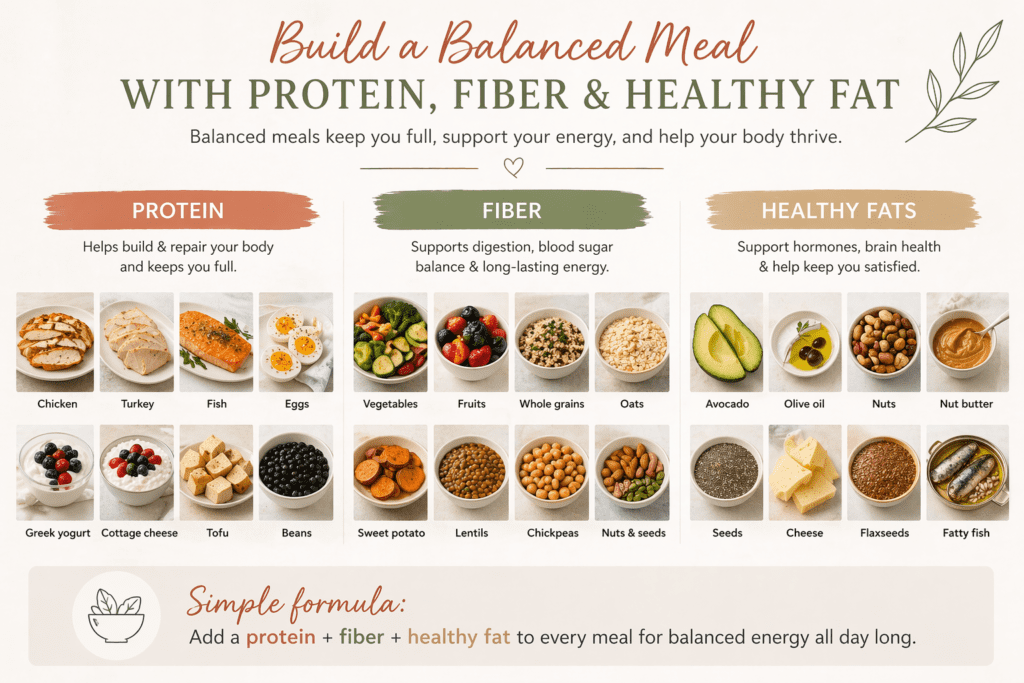
Building meals that include protein, carbohydrates, and fat
Avoiding long gaps without food
Supporting energy and blood sugar stability
These small shifts can help your body feel more supported—and more responsive.
A different way to think about weight loss
If you’ve been stuck despite doing everything “right,” it’s not because you need more discipline.
It’s because your body needs a different kind of support right now.
Weight loss after 35 isn’t about pushing harder.
It’s about working with your body instead of against it.
What’s next
In the next post, I’ll walk through why your energy, sleep, and even your blood sugar may feel off—and how your eating patterns play a role in all of it.
For now…
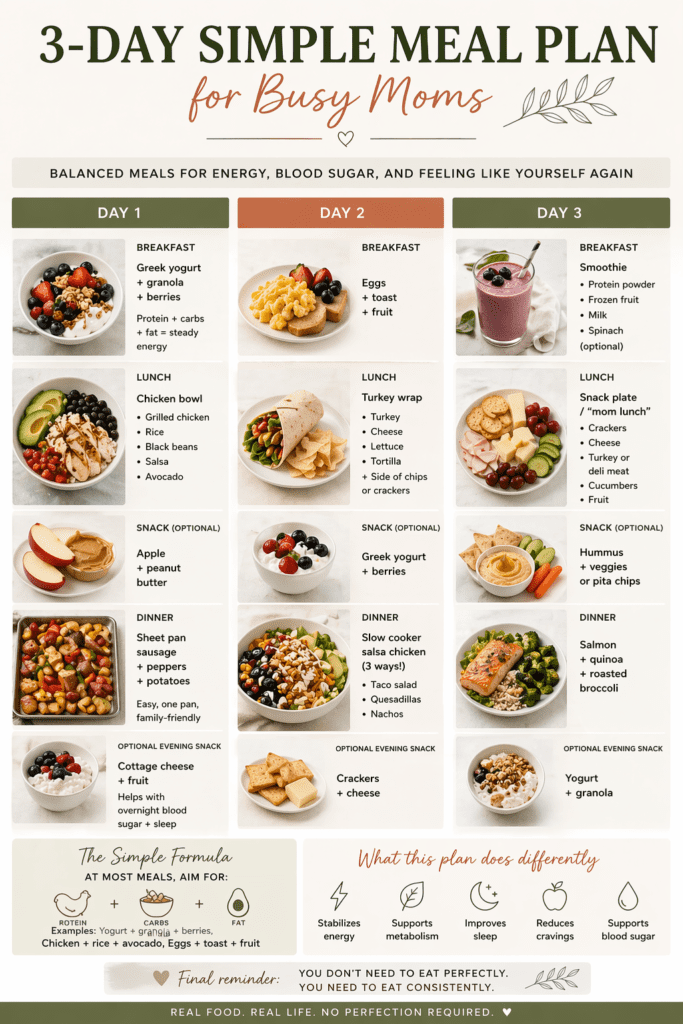
If you’d like a simple place to start, I’ve created a realistic 3-day meal plan for busy moms that focuses on balanced, consistent meals you can actually stick with.
🍽️ The Simple Formula (this is the real goal)
At most meals, aim for:
Protein + Carbs [Fiber] + Fat
Examples:
- Yogurt + granola + berries
- Chicken + rice + avocado
- Eggs + toast + fruit
What this plan does differently
This isn’t about eating less.
This plan helps:
- Stabilize energy
- Support metabolism
- Improve sleep
- Reduce cravings
- Support blood sugar
Final reminder
You don’t need to eat perfectly
You need to eat consistently